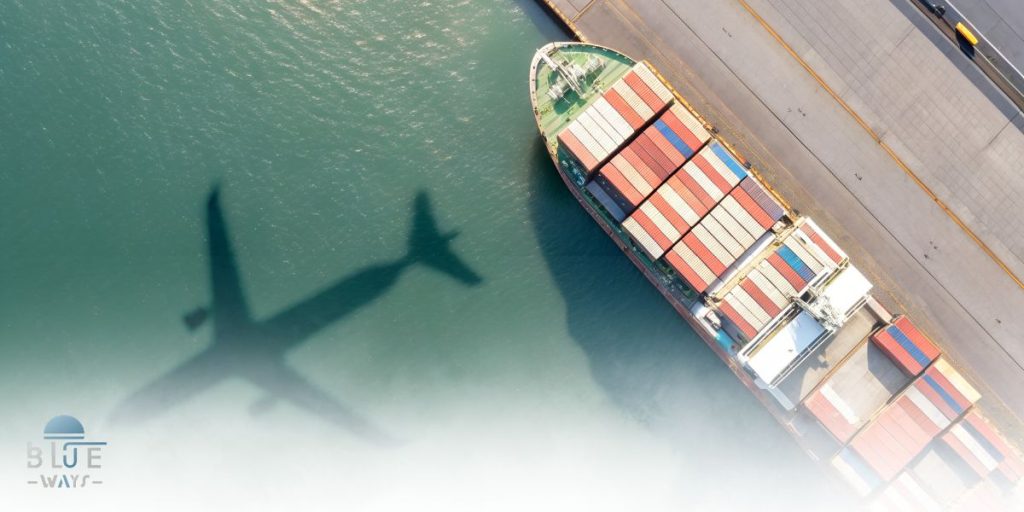
Choosing the right transportation method is one of the most important decisions in international trade. Your choice between sea freight, air freight, and land transport directly impacts delivery time, cost efficiency, cargo safety, and supply chain reliability.
This guide explains the key differences and helps you select the best option based on your business needs.
1. Sea Freight (Ocean Shipping)
Sea freight is the most widely used method for global trade, especially for bulk and heavy cargo.
Sea Freight
Key Characteristics:
- Best for large-volume shipments
- Uses containers (FCL and LCL)
- Operates via international shipping lines and ports
Advantages:
- Highly efficient for bulk cargo
- Suitable for heavy machinery, raw materials, and industrial goods
- Lower cost per unit (especially for large shipments)
- Ideal for long-distance international trade
Disadvantages:
- Slower transit time compared to other methods
- Dependent on port availability and schedules
- More complex customs and documentation process
Best For:
- Manufacturing imports/exports
- Raw materials
- Non-urgent goods
- High-volume shipments
2. Air Freight (Air Cargo)
Air freight is the fastest international transportation method and is used when speed is critical.
Air Freight
Key Characteristics:
- Uses commercial or cargo aircraft
- Operates through international airports
- Highly controlled logistics process
Advantages:
- Fastest delivery method
- High reliability and schedule accuracy
- Lower risk of damage or theft
- Ideal for high-value goods
Disadvantages:
- Limited cargo capacity
- Not suitable for heavy or oversized shipments
- Higher operational cost compared to sea freight
Best For:
- Electronics
- Pharmaceuticals
- Fashion products
- Urgent or high-value shipments
3. Land Freight (Road & Rail Transport)
Land freight is mainly used for regional and cross-border trade between neighboring countries.
Land Freight
Key Characteristics:
- Includes trucking and rail systems
- Used for short to medium distances
- Often connects ports to inland destinations
Advantages:
- Flexible routing
- Door-to-door delivery possible
- Faster than sea freight for regional routes
- Cost-effective for medium distances
Disadvantages:
- Limited to land-connected regions
- Border delays in international routes
- Weather and road conditions can affect delivery
Best For:
- Regional trade
- Neighboring countries
- Final-mile delivery from ports
- Cross-border trucking corridors
4. Direct Comparison Table
| Factor | Sea Freight | Air Freight | Land Freight |
|---|---|---|---|
| Speed | Slow | Very fast | Medium |
| Cost efficiency | High | Low | Medium |
| Cargo capacity | Very high | Limited | Medium |
| Safety | High | Very high | Medium |
| Best use | Bulk trade | Urgent goods | Regional logistics |
5. How to Choose the Right Method?
Choose Sea Freight if:
- You ship large volumes
- Cost efficiency is priority
- Delivery time is flexible
Choose Air Freight if:
- You need fast delivery
- Goods are high-value or time-sensitive
- Shipment size is small
Choose Land Freight if:
- You trade with nearby countries
- You need door-to-door delivery
- You want a balance between cost and speed
6. Hybrid Logistics (Modern Trend in 2026)
Many companies now combine methods:
- Sea + Land (port-to-door delivery)
- Air + Land (fast arrival + inland trucking)
- Sea + Air (cost optimization for mixed cargo)
This hybrid model improves flexibility and supply chain efficiency.
7. Final Conclusion
There is no “best” shipping method for all situations. The optimal choice depends on:
- Cargo type
- Urgency
- Budget
- Destination distance
- Supply chain strategy
In modern international trade, successful companies often use a multi-modal logistics strategy rather than relying on a single method.